- sales@biolabmarket.com
- +1 (469) 819-5592
Applications of Lab Spray Dryers
Lab spray dryers are highly versatile instruments used extensively in research, development, and small-scale production. They convert liquid solutions, suspensions, or emulsions into dry powders with precise control over particle size, moisture content, and morphology. This ability makes lab spray dryers indispensable in a wide range of scientific and industrial applications.
- Pharmaceutical Industry
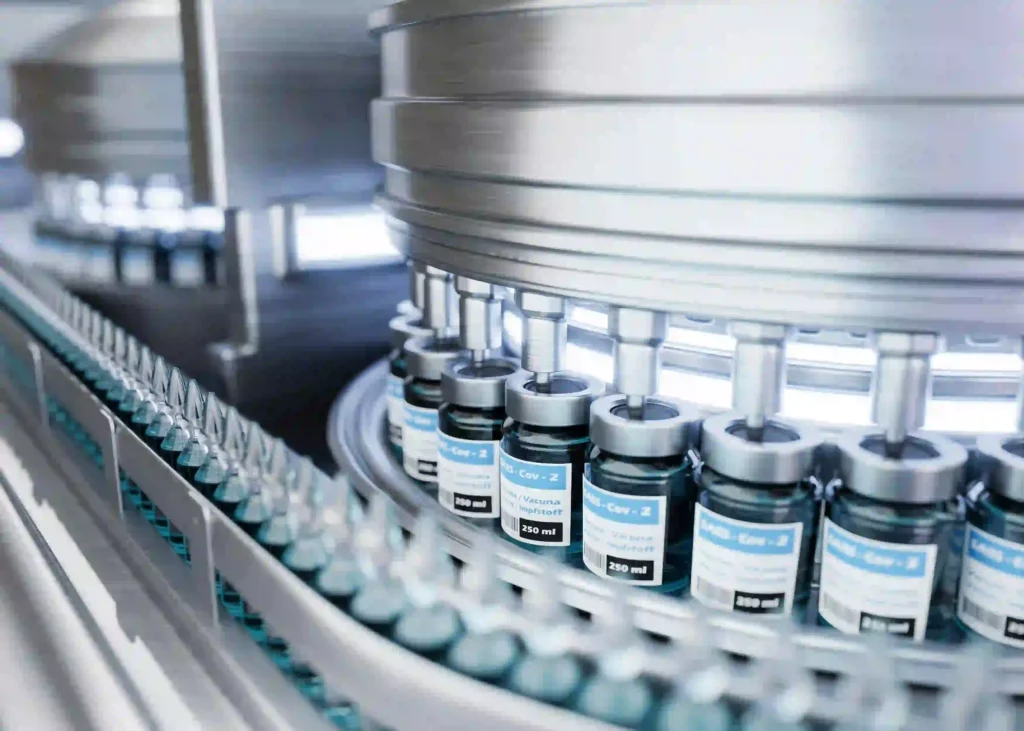
Spray drying in pharmaceutical labs plays a crucial role in developing new drug formulations. Key applications include:
- Powdered Drugs for Oral and Inhalation Use: Laboratory spray dryers produce uniform powders suitable for tablets, capsules, or inhalable medications.
- Nanoparticle Formulations: Controlled drying allows for the creation of nanoparticles that improve solubility, bioavailability, and targeted drug delivery.
- Preservation of Sensitive Compounds: Temperature-controlled drying ensures that heat-sensitive compounds such as proteins or enzymes retain their activity.
Example: Researchers often use lab spray dryers to convert liquid antibiotic solutions into stable powders for inhalation therapy, improving patient compliance and drug stability.
- Food and Nutraceutical Industry
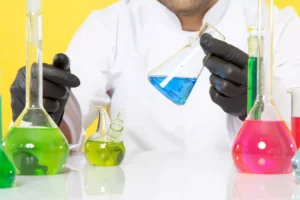
In the food sector, lab spray dryers help transform liquid ingredients into powdered products with extended shelf life and ease of handling. Key applications include:
- Protein and Dairy Powders: Whey protein, milk powders, and other nutritional supplements are efficiently processed.
- Flavorings and Nutrients: Vitamins, herbal extracts, and natural flavorings can be encapsulated to protect them from heat and oxidation.
- Probiotics Encapsulation: Sensitive probiotics or live cultures are spray-dried to preserve viability during storage and ingestion.
Example: Spray drying fruit juices or plant extracts enables the production of stable powdered ingredients for functional foods and beverages.
- Chemical and Material Science
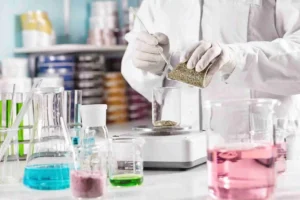
Lab spray dryers are valuable tools in chemical research and material science. Applications include:
- Fine Powder Production: Polymers, catalysts, and chemicals can be dried into powders with uniform particle size.
- Nanomaterials Synthesis: Nanoparticles and composite materials can be prepared with controlled morphology for advanced applications.
- Controlled Reactivity: Particle size and surface area control allow precise chemical reactions and better processability.
Example: Scientists use spray drying to produce ceramic powders with uniform particle sizes, which are essential for high-quality 3D printing and advanced material fabrication.
- Research and Development
Laboratory spray dryers are indispensable in R&D because they allow experimentation at a small scale before scaling up to industrial processes. Benefits include:
- Formulation Testing: Evaluate the performance of new formulations without large-scale production.
- Drying Kinetics Studies: Investigate how temperature, feed rate, and atomization affect powder properties.
- Process Optimization: Fine-tune parameters to achieve reproducibility and high-quality results.
Example: A research lab may test different excipients in a spray-dried pharmaceutical powder to optimize dissolution rate and stability before moving to pilot-scale production.
- Environmental and Miscellaneous Applications
Lab spray dryers are also applied in niche fields, such as:
- Biotechnology: Drying enzymes, proteins, and microbial cultures for storage and transport.
- Environmental Studies: Producing powdered samples from water or soil extracts for analysis.
- Cosmetics and Personal Care: Formulating powdered ingredients like vitamins, natural extracts, or fragrances.
Conclusion
Lab spray dryers offer precise, reproducible, and efficient solutions for converting liquids into powders. Across pharmaceuticals, food, chemicals, and advanced research, they ensure controlled particle size, stability, and scalability. By bridging lab-scale experimentation with potential production, these instruments remain an essential part of modern laboratory workflows.